
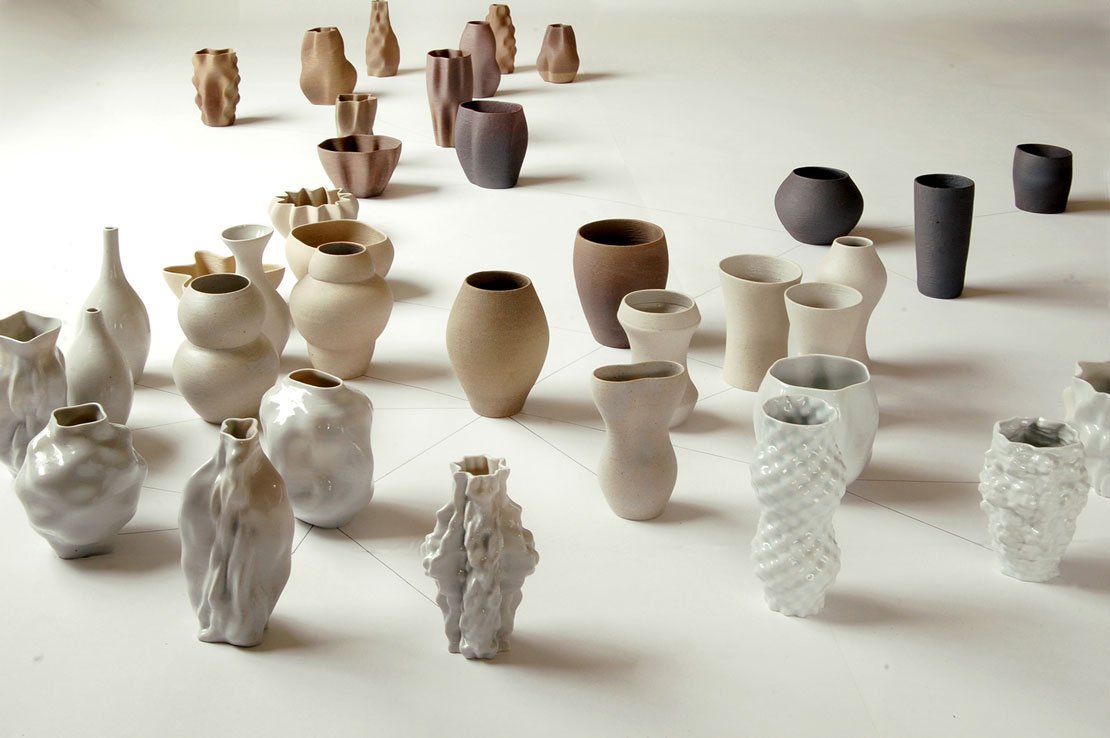
I do not need to explain to the readers of this journal the long and diverse history of pottery. In every corner of the globe where clay exists, pottery is to be found, objects that express the character and stories of the culture and of the people who made them. I identify as a potter, a creative who wants to continue the tradition of making clay vessels that represent the age in which I live—an age in which computer technology is ubiquitous. I am of the opinion, having considered the diverse heritage of pottery, that a pot is no more than a sculptural object, a human construct, not bound by any single function but more of a common visual language and tradition that reflects the culture in which it was produced. Simply put, if pottery is all about domestic, utilitarian function, why don’t all pots look the same? If you think you know exactly what a pot is, possibly this is not the article for you.
Like them or loathe them, computers are able to compute information at faster and faster speeds. The social effects of this technology are everywhere to be seen—even in the pottery studio, where computers have been for some time. Who with an electric kiln does not have a digital firing controller or use glaze calculation software? The digital revolution is already in the pottery studio. What is particularly exciting to me are the new ways of working with clay that computation offers, such as generating forms for 3-D printing with computer code, how this might come to redefine what a pot is, and the relationship between the maker and the object.