
Search form

Shopping cart 0 items
Subscribe
Donate
Member Login
Student Login
Share
Login
Home
  • Become a Member
  • Studio Potter Store
  • Journal
    • Current Articles
    • Collections
      • Interviews
      • Narrative
      • History
      • Technology
      • Criticism
      • Other
    • Print Archive
  • Announcements
    • General
    • Classified
    • Events
    • Newsletter
  • About
    • Mission
    • History
    • Masthead
    • Board of Directors
    • Contact
    • Privacy Notice
    • FAQ
  • Grants
  • Contribute
    • Underwriting
    • Donate
    • Write for SP
    • Internships
    • Partners
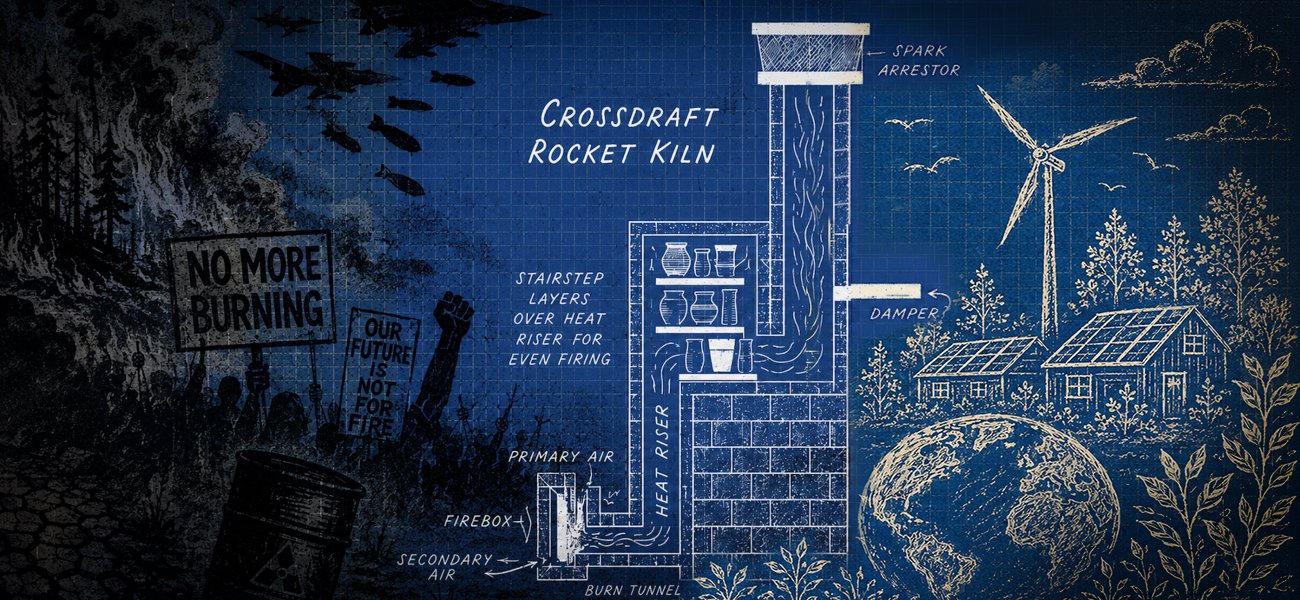
Layered graphic by Julianna Brazill and Randi O'Brien

Pottery After Modernity

Keith Luebke (he/him/his)

July 01, 2026

In ancient China, intellectuals, artists, and sometimes court officials would retire to the countryside during times of political and dynastic chaos. As we look at the world today, there is so much transition and change, too often accompanied by human suffering. It is easy to understand the desire to retreat from civic life during times of turmoil or when things don’t go as wished or planned.

During a contemporary lifetime – those of us alive and breathing at this time in human history – these periods of social chaos most often victimize people living in Asia, Africa, and Latin America. The horrors of the European experience – World War I and a more globalized WW II – seem distant from the current suffering in Sudan, Gaza, Ukraine, and so many parts of our heating planet.

Scientists and historians are still debating the role of climate change as a factor in the Syrian civil war. The war was undoubtedly rooted in complex political and religious histories. However, water availability, climate variability, and drought were important factors behind the displacement of rural people into cities. And those conditions indeed resulted in food insecurity and higher unemployment. Clearly, those conditions can contribute to political instability. As temperatures increase, there will be more examples of the impacts of climate change on nations, tribes, and regions.
...
Read more

Author Bio

Keith Luebke (he/him/his)

Keith Luebke is a retired teacher with two degrees in art, one in sociology, and one in urban studies. He worked in a variety of nonprofit organizations for nearly twenty years. That work included promoting craftspeople in rural Illinois and New Mexico, but most of his work was with people experiencing homelessness. Keith was a part-time grant writer from the 1980s into this new millennium. He wrote funding proposals to create housing and supportive services for low-income families and individuals. 

CONTACT  |  NEWSLETTER SIGNUP  |  COPYRIGHT © 2020 STUDIO POTTER  |  SITE DESIGN

Design by Adaptive Theme

Member Log in

Forgot your password?
Continue as Guest
Become a Member
Library IP Login