


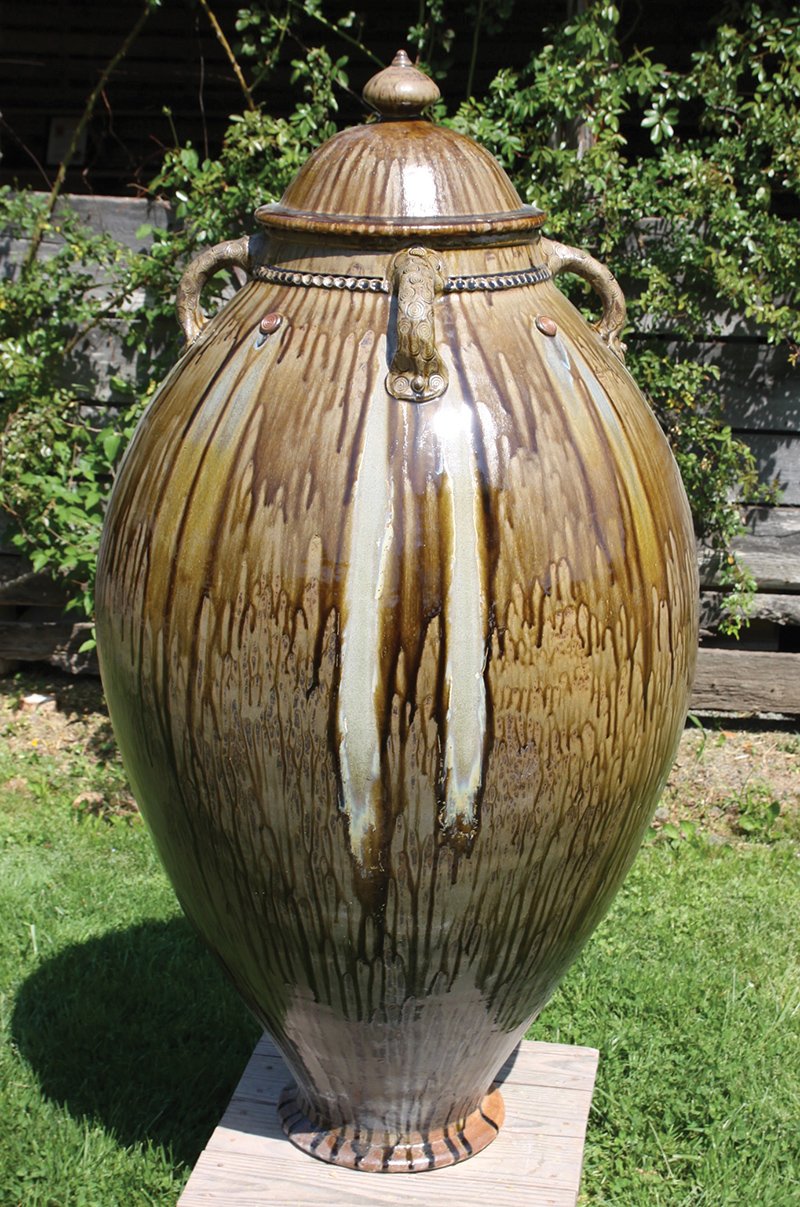
 North Carolina is home to a tradition of great pots that dates from a time when there was no refrigeration or canning, when jars, jugs, and dishes made from local clays and fired in wood-burning kilns were essential parts of a pioneering family’s survival kit.
Today these old pots are an archive of the aesthetic and technical knowledge possessed by the potters who lived in the area where I now live. I admire the discipline, the pride, and the talent of the potters who made them. Their pots are a touchstone to me—a wellspring. I’m sensitive to the past, and I’m sensitive to my place, but this place is not the same as it was, nor are the people.
Different conditions exist today than did one-hundred-fifty years ago, or even fifty years ago, and those current conditions have stripped functional potters of an historic role: to create vessels to preserve foods and liquids. Now we mostly make pots that serve food and liquids.
Contemporary wood-firing potters are inevitably representative of a continuum of past practices, and as such we speak to the complexity of our past and present. Our wood-fired pots are not generic items spat out by machines but highly considered pots that endeavor to go beyond simple function to encapsulate a host of aesthetic and symbolic values.
